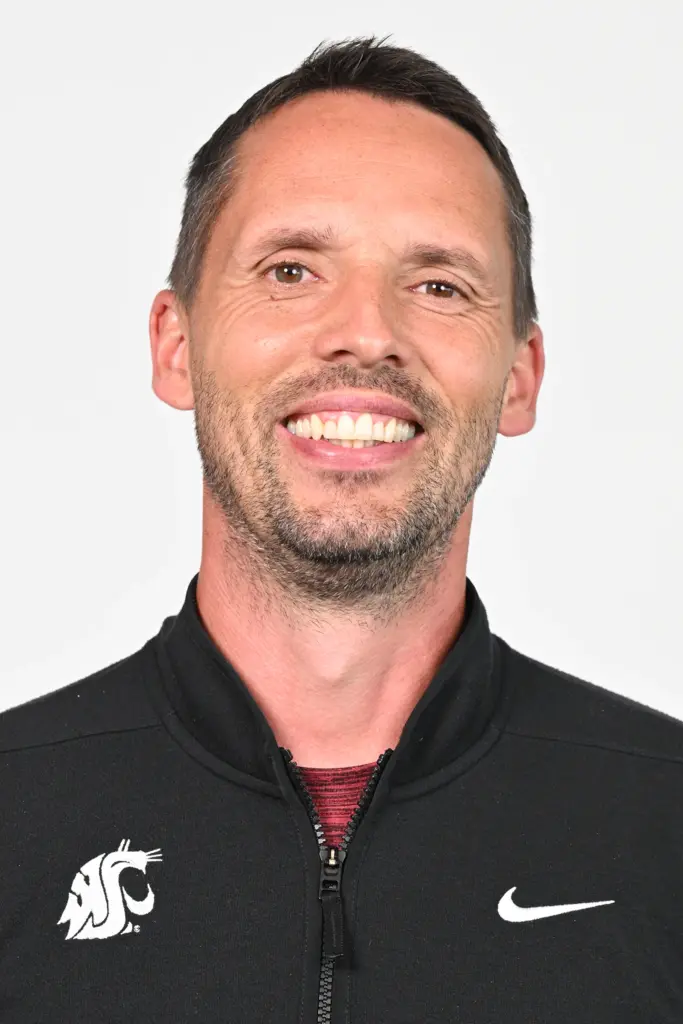
By: Erin Mullins
For first year Washington State University women’s soccer coach Chris Citowicki, supporting athletes regardless of their performance isn’t a question, it’s a guarantee.
Citowicki comes to Pullman after 8 seasons as head coach at the University of Montana. Before that, he coached in the midwest from the club to D1 level.
Citowicki’s first staff position was as a graduate assistant at Division-II Bemidji State in 2006 and 2007.
In all his time coaching, Citowicki said he has never implemented punitive consequences for athletes who are struggling in their performance or mentality or kicked someone off a team.
“Oh, I’ve never reduced [a scholarship], no.” he said. “Unless somebody decides they’re leaving, then of course it goes to zero.”
Everyone is on their own timeline when it comes to athletic development, Citowicki said. It is hard for athletes when they struggle with their performance for a season or two, but even so it is an open dialogue.
Citowicki said he didn’t have athletes transfer for the last two years he was at Montana.
If you treat athletes correctly and give them the right resources, they want to be a part of the process, he said. He is always willing to work with athletes who want to develop.
“But if at one point you decide you’re not pouring back into this program and you don’t care anymore, then comes the conversation of is this the right place for you?” Citowicki said. “And maybe you have to find something different, right? But if it’s a two-way street and we’re both working really hard at something, then usually we can figure it out.”
So far this season, the Cougs have a 1-2-1 record and a 1-1 home record.
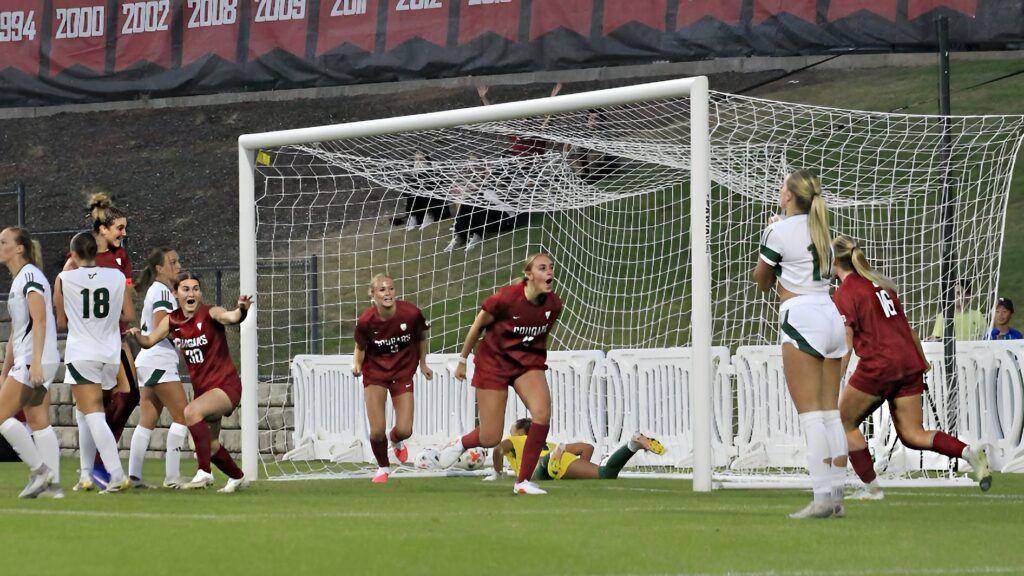
Before that, between regular season and conference championships, Citowicki is coming off of nine total Big Sky Championships, including three-consecutive regular season titles and a win at the 2025 Big Sky Tournament Championship.
Citowicki said he has to keep in mind that he is starting over as a year one coach in Pullman and can’t compare this year to his fortuitous run at Montana.
“I retrain myself a little bit, and I’m like, “This is like teaching a kid to walk again. I’m dealing with a toddler, not a teenager or an adult,” he said. “How do I wake up the dormant parts of my brain that haven’t been awake for a long time and teach them the processes the way they have to be to lay the foundations so future generations can be successful?”
While a 1-2-1 record may not seem to be a path for future wins this season on paper, Citowicki is focusing on the process, like doing well at the next practice. He said he is “fired up,” about the challenge of a new team, and the players are excited as well.
While Citowicki admired the WSU soccer program as a professional program before his time at WSU, he was not aware of the depth of the resources the team had.
“It just blows my mind,” he said.
These resources include nutritional services like blood work or legal supplements like collagen or iron for players who need them. Menstrual cycle tracking is also available. Citowicki does not administer these programs, but rather they are carried out by staff like athletic trainers and dieticians.
“You’re trying to maximize the female athlete. Don’t look at her as if she is a male athlete,” he said. “Give her what she needs so that she can be at peak performance no matter where she is over the course of a week, a month, a year. And it’s so fun to be able to spoil them in that way”

Fueling is key for female athletes. According to Puscheck et al, 2025, 47.17% of Division one athletes were at risk for low energy availability and 22.73% were at risk for both low energy availability and eating disorder, with females being more at risk than male athletes.
When it comes to an athlete struggling with an eating disorder or their body image, Citowicki said he is not an expert, and while he can support the athlete through their struggles the work needs to be left to professionals.
Nutrition is also available on the road. A team dietician helps plan what restaurants to go to and prepares a large food bag for the athletes for snacks, pre-fueling and post-fueling.
Mental health support is also available for athletes through clinical psychologist Justin Martel and LICSW mental health counselor Josh Clein.
Clein stops by to see the team about once a week, Citowicki said.
Despite all the resources, sometimes it all comes down to a conversation.
After the Cougs 0-3 loss to South Dakota on the road, Citowicki checked in with a player who seemed down.
“Like, tell me where you’re at. And she’s like, ‘Oh no, I was just disappointed with myself. I wasn’t trying to make it look like I was disappointed with the team,’ he said. “‘I just thought I played poorly because of X, Y, Z.’ And to sit with her and say: ‘Why do you feel that way? Because when I watched you play, I thought you were spectacular, right?’”
Next up for WSU soccer is a home game versus UC Irvine in the lower soccer field at 6 p.m. on Thursday. UC Irvine enters the game with a 0-1-1 record.
Aug 27(Thu)
0 Comments